
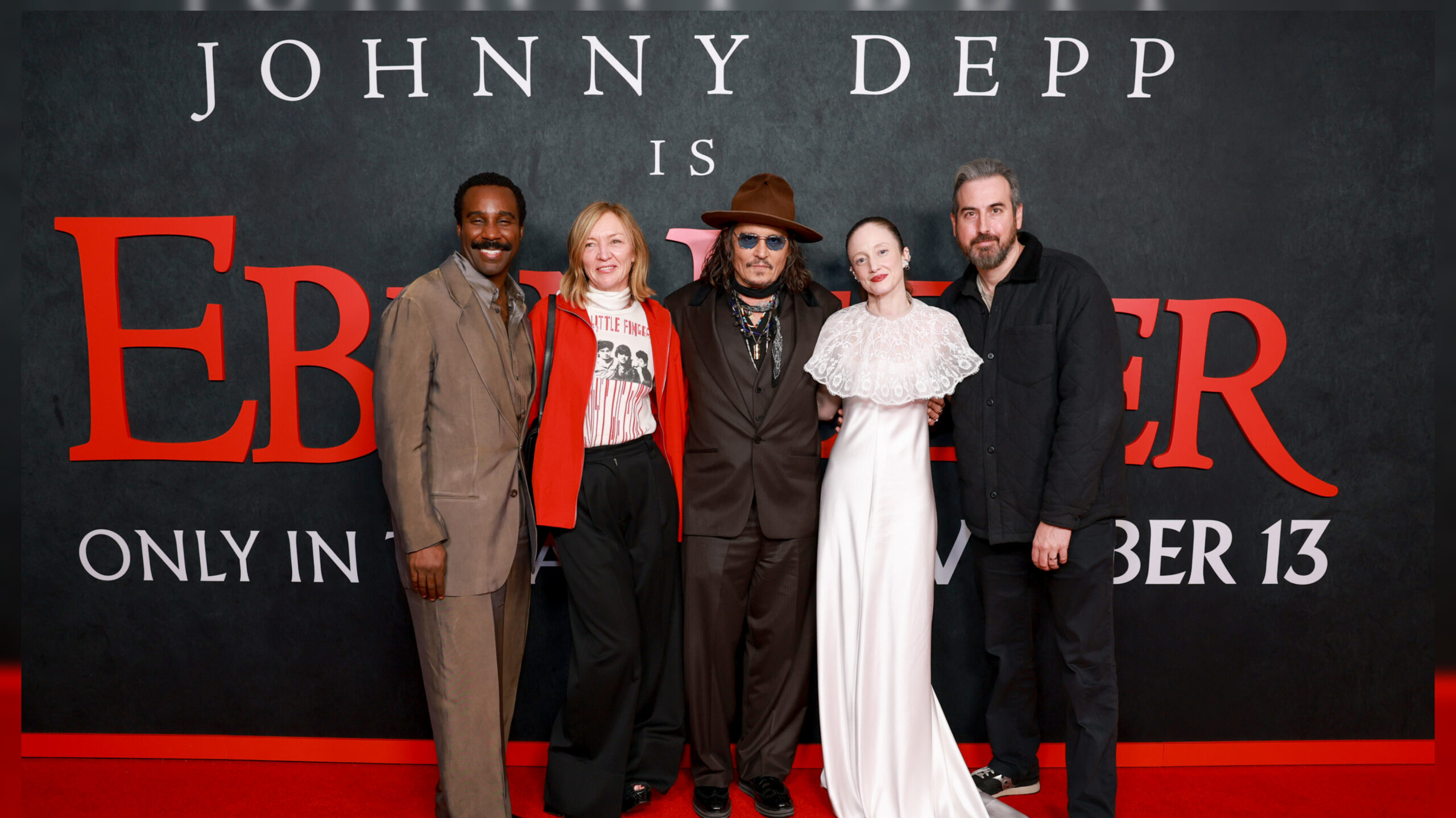
Every generation reimagines A Christmas Carol, but few dare to ask what Scrooge looks like through the lens of psychological horror. Ti West’s “Ebenezer” doesn’t soften Dickens’ miser—it fractures him. Johnny Depp, an actor who has built a career on inhabiting fractured men (from Edward Scissorhands to Sweeney Todd), steps into Scrooge not as a cautionary tale but as a study in pathology. West strips away the redemptive sentimentality and asks a darker question: What if the ghosts weren’t here to save Scrooge, but to unravel him? The result is a Christmas Carol for the prestige thriller era—one where Depp’s commitment to vulnerability and menace transforms a familiar story into something genuinely unsettling.
Ti West’s masterstroke isn’t just Depp in the lead—it’s the caliber of talent surrounding him. Rupert Grint, who has spent years shedding the shadow of Ron Weasley, finds unexpected depth as Bob Cratchit, transforming what could be a throwaway role into the emotional anchor of the film. Grint’s Cratchit isn’t pitiful; he’s dignified in his struggle, and his scenes with his family carry a quiet devastation that grounds the horror. But it’s Ian McKellen as Marley who steals the narrative weight. Rather than simply appearing as a spectral warning, West and McKellen invest time in Marley’s past—showing us the man before the chains, the friendship before the betrayal. This gives Marley’s ghost an intimate cruelty; he knows exactly how to haunt Scrooge because he understands him. When Marley appears, it’s not a jump scare—it’s a reckoning between two men who once were something to each other.
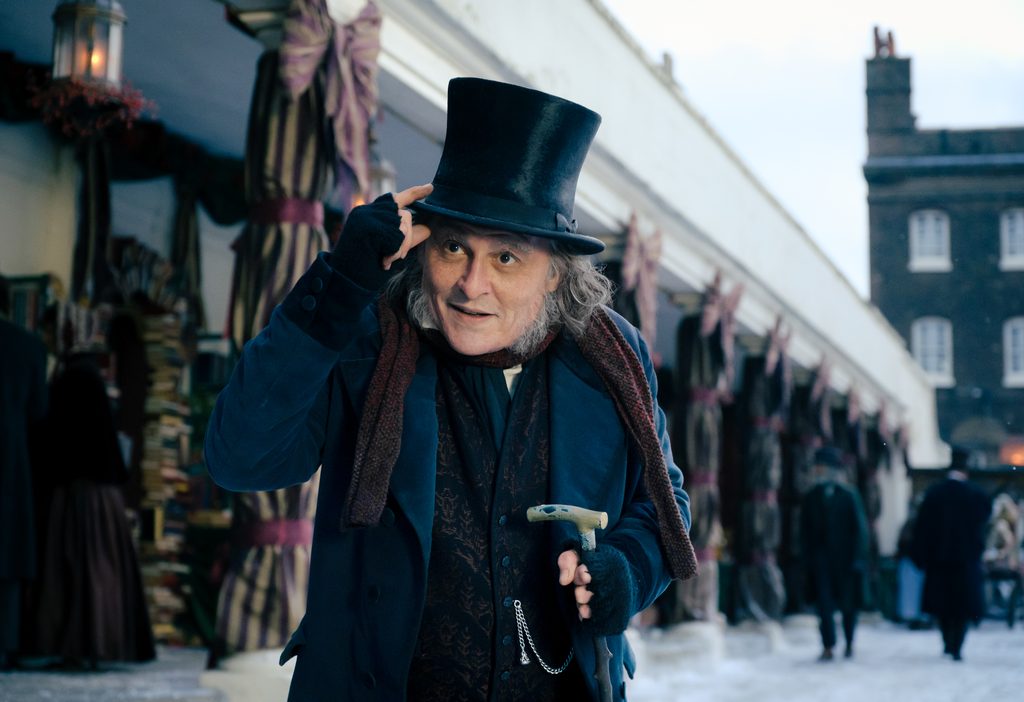
Yet for all its promise, Ebenezer stumbles where it matters most: Depp’s performance. Given his history of theatrical excess—the anarchic charm of Captain Sparrow, the manic energy of the Mad Hatter—audiences might reasonably expect Scrooge to become a canvas for Depp’s more unhinged impulses. Instead, West demands restraint, and Depp complies almost too dutifully. The result is a Scrooge that feels cautious, even flat, lacking the volcanic intensity that would make his psychological unraveling genuinely terrifying. Compared to Jim Carrey’s gleefully unhinged animated take, or even Carrey’s live-action Ebenezer Scrooge McDuck energy, Depp’s version reads as deliberately muted—whether by design or miscalculation remains unclear. The ghosts fare even worse. Despite West’s reputation for visual precision and modern filmmaking technology that should render the supernatural as visceral and grotesque, the apparitions feel sanitized. They lack the genuine menace or hideousness that would justify the film’s psychological horror premise. What should be nightmarish spectres instead register as competent but forgettable, failing to match the emotional weight the narrative desperately needs.
Yet despite its shortcomings, Ebenezer remains a Christmas Carol worth experiencing. The film’s central hook—how Scrooge will react to being haunted by forces beyond his control—carries enough narrative weight to sustain interest, even when Depp’s performance doesn’t ignite. There’s genuine curiosity in watching each spirit materialize, in wondering whether West will finally push into the grotesque, in questioning whether Scrooge’s psychological armor will crack. The supporting cast keeps the emotional stakes alive when the lead falters, and the film’s commitment to subverting holiday sentimentality gives it a distinctive edge in the crowded season of feel-good fare. Ebenezer is far from perfect—it’s a film that reaches for something bold and settles for competent. But in a landscape of safe, recycled Christmas movies, competent with ambition still deserves your attention. This may not be the Depp showcase audiences hoped for, but it’s a holiday film unafraid to ask uncomfortable questions. For that alone, it earns its place on your December watchlist.
This film is in theaters November 13th. I rate it (2.5/4) 🍿
Red Carpet Interviews with Director and Cast Members:

Expressing my opinion
Chief Editor