
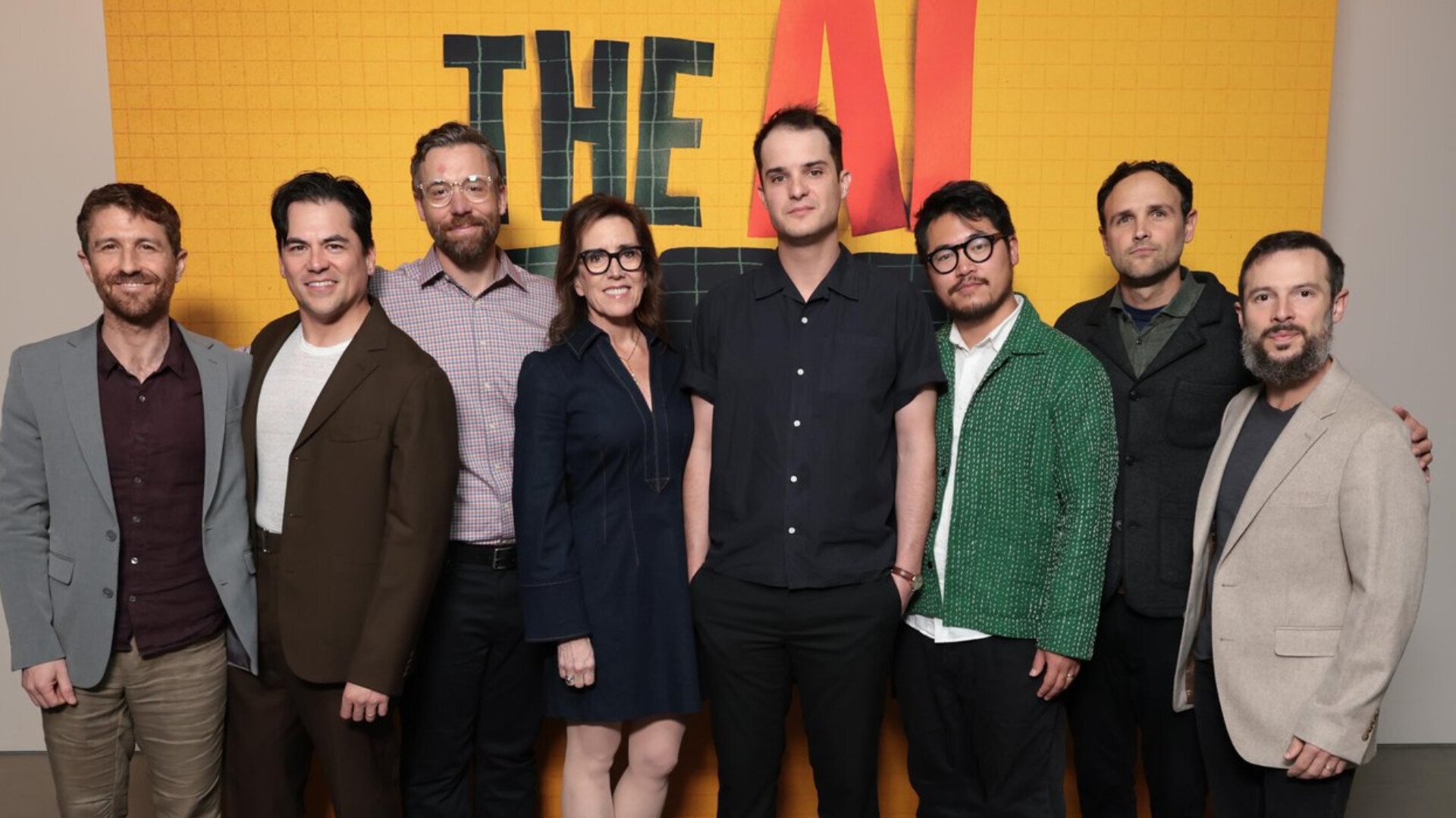
The AI Doc: Or How I Became an Apocaloptimist offers a timely discussion on the fast-moving AI technology that most people can’t ignore. Hold on to your popcorn, because this documentary, directed by Charlie Tyrell & Daniel Roher, quickly builds up to a pace that may be hard to settle into. Perhaps it’s fitting for a film about runaway technology, but it’s frantic and almost doesn’t know which way to turn. Despite the anxious start, there are solid conversations and information to gain from Roher’s journey as he seeks to soothe his AI-induced existential dread.
At times, The AI Doc feels overly stylized and visually overwhelming, but it succeeds in creative storytelling. Roher’s personal narrative is woven in, documenting the progress of his wife’s pregnancy and his concerns about the impact of AI on the world. Creative visuals (like stop-motion and animated drawings) are used to visually represent Roher’s emotions, his sometimes complex conversations, and to imagine the current and future states of AI. The film does present some clear perspectives- primarily AI as good vs. bad- through interviews with AI scholars, developers, experts, and organizations. Roher addresses the fears that AI has caused him, the risks and ethics of the AI advancement, and how society is coping. His conversations also cover the optimism that this powerful technology inspires.

The effort toward transparency and a balanced representation of information is mostly successful. This is aided by including organizations in the discussion, such as ‘The Center for Humane Technology’, whose objectives promote technology that serves human well-being. It does, however, feel like there’s an assumption of undeniably good outcomes that are worth all the risks. The AI Dock can appeal to a broad audience, no matter how you feel about AI. Roher asks a lot of questions, some of which audiences might share. By the quirky end, this film will make a case for apocaloptimists and for hope. It is likely to provoke discussion and possibly engagement with AI beyond the surface level. This is good because it doesn’t offer explicit answers as much as it encourages viewers to seek their own.
This documentary film releases March 27th. I rate it a (3/4) 🍿
